Upholstery Seam Styles Explained: Piping, Topstitching, and French Seams

Updated: 3 hours ago
When choosing new upholstery for your furniture, most people naturally focus on the fabric, color, and texture. But there's another detail that can dramatically change the finished appearance of your furniture: the seams.
The way upholstery panels are joined and finished can make a chair look traditional or contemporary, understated or bold, casual or sophisticated. Even when the exact same fabric is used, changing the seam style can give a piece of furniture an entirely different personality.
At Elegance Upholstery, we offer a variety of seam finishes that allow our customers to customize the appearance of their furniture. Let's explore five popular options and how to choose the right one for your project.

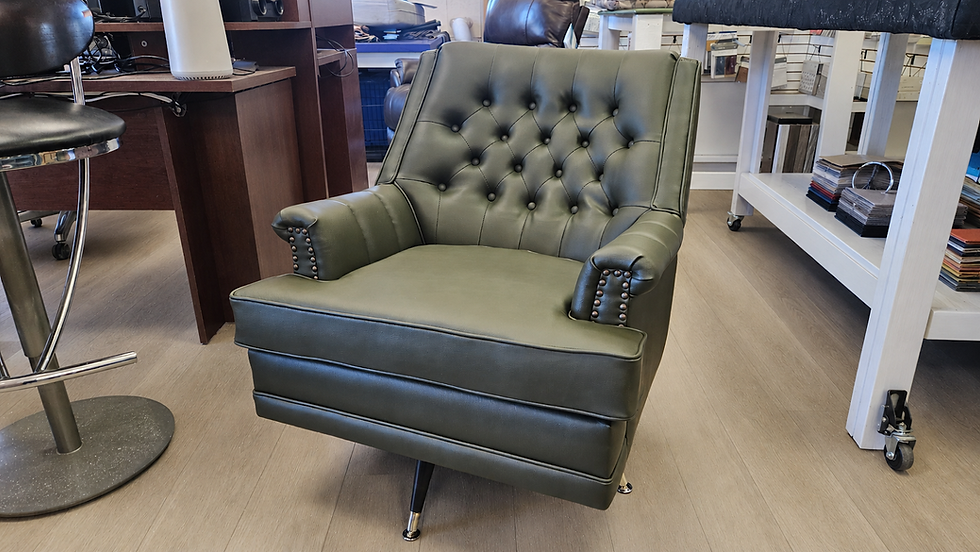
1. Same-Fabric Piping (Self-Welting)
Piping, also called welting or cording, is created by wrapping a narrow strip of fabric around a cord and sewing it into a seam. This produces a rounded, raised edge that outlines the shape of the furniture.
When the piping is made from the same material as the rest of the upholstery, it's called self-welting or same-fabric piping.
This is one of the most familiar upholstery finishes, commonly found on sofas, armchairs, dining chairs, and cushions.
Because the piping blends into the surrounding material, it defines the furniture's shape without introducing another color or pattern.
Why choose same-fabric piping?
Creates a classic, tailored appearance.
Accentuates the contours and shape of the furniture.
Adds visual definition without introducing contrasting colors.
Works particularly well with traditional and transitional furniture designs.
Same-fabric piping is an excellent option when you want the furniture to retain its original character or prefer a subtle, timeless finish.
2. Contrasting Piping
Contrasting piping uses the same construction technique as traditional piping, but the cord is wrapped in a different fabric or color.
For example, a light beige chair might feature dark navy piping, or a solid-colored sofa might incorporate piping made from a coordinating patterned fabric.
Rather than blending into the upholstery, contrasting piping deliberately draws attention to the furniture's shape.
It can also tie together other elements of a room, such as accent pillows, curtains, or neighbouring furniture.
Why choose contrasting piping?
Creates a distinctive, customized appearance.
Highlights the lines and contours of the furniture.
Introduces an accent color without overwhelming the main fabric.
Can complement other colors or patterns in the room.
Contrasting piping works particularly well when you want to make a design statement or introduce a small amount of contrast into an otherwise neutral piece.
However, because the piping emphasizes every edge it follows, it's important to consider whether the furniture's shape is something you want to highlight.
3. Same-Color Topstitching
Unlike piping, topstitching doesn't use a cord.
Instead, a visible row of stitching runs alongside a seam, typically securing the seam allowance underneath and producing a flatter, cleaner finish.
When the thread closely matches the upholstery fabric, the stitching becomes relatively subtle.
This creates a more streamlined appearance that is frequently associated with contemporary furniture.
Why choose same-color topstitching?
Produces a clean, modern appearance.
Avoids the raised profile of traditional piping.
Creates subtle definition without emphasizing every edge.
Works well with leather, vinyl, and many upholstery fabrics.
Same-color topstitching is especially attractive on furniture with simple shapes, clean lines, or a minimalist design.
It's also a popular choice when modernizing older furniture. Replacing traditional piping with topstitching can sometimes make a chair or sofa appear considerably more contemporary without changing its underlying shape.
4. Contrasting Topstitching
Contrasting topstitching uses the same basic technique, but the thread is deliberately chosen to stand out against the upholstery.
For example, white stitching on black leather creates a sharp, defined look, while tan stitching on dark brown leather produces a warmer, more understated contrast.
Because there is no cord involved, the contrasting thread adds decorative detail without creating the rounded edge associated with piping.
Why choose contrasting topstitching?
Creates a distinctive, modern appearance.
Adds visual interest without the bulk of piping.
Allows for subtle or dramatic color combinations.
Can complement the stitching on other furniture, automotive interiors, or decorative accessories.
Contrasting topstitching is particularly effective on leather and vinyl, where individual stitches can become an important part of the design.
One consideration is that contrasting thread makes the stitching itself much more noticeable. Stitch length, spacing, and consistency are all more visually apparent than they would be with matching thread.
5. French Seams
A French seam is another attractive option that creates a distinctly tailored appearance.
In upholstery, the term commonly refers to a seam with two parallel rows of visible stitching, one on either side of the central seam.

Unlike piping, a French seam doesn't contain a cord. Instead, the two stitch lines create a symmetrical detail that draws attention to the seam itself.
French seams are commonly used in automotive upholstery, leather furniture, and custom seating where a clean, structured appearance is desired.
They can be produced using thread that matches the upholstery or thread in a contrasting color.
Why choose a French seam?
Creates a sophisticated, tailored appearance.
Produces a distinctive double-stitched detail.
Adds decorative definition without piping.
Works particularly well on leather, vinyl, and many tightly woven fabrics.
French seams are particularly attractive when the seam runs across a broad, visible surface, such as a seat, backrest, or upholstered panel.
A note about terminology: In garment sewing, a traditional French seam is a different construction technique used to enclose raw fabric edges. The double-topstitched style discussed here is what is commonly called a French seam in upholstery.
Which Upholstery Seam Style Is Best?
There isn't one seam style that's universally better than the others. Each creates a different appearance, and the ideal choice depends on the furniture, upholstery material, and overall design.
Here's a quick comparison:
Seam style | Appearance | Ideal design direction |
Same-fabric piping | Defined, rounded edges | Classic and traditional |
Contrasting piping | Bold, outlined edges | Decorative and customized |
Same-color topstitch | Subtle, flatter finish | Modern and minimalist |
Contrasting topstitch | Visible decorative stitching | Contemporary and distinctive |
French seam | Two parallel stitch lines | Tailored and sophisticated |
Does the Seam Style Affect Durability?
Although seam construction can influence durability, no single decorative finish is automatically stronger or longer-lasting in every application.
The strength of an upholstered seam depends on several factors, including the material, thread, stitch construction, seam allowance, and stresses the furniture experiences during use.
Piping adds material and thickness along an edge, while topstitching and French seams can help secure seam allowances. However, proper construction and suitable materials are generally more important than the decorative style alone.
Some fabrics also respond better to certain seam treatments than others.
For instance, very thick upholstery materials may produce excessive bulk with piping, while loosely woven fabrics or heavily textured materials may not display decorative stitching as
clearly as smooth leather or vinyl.
It's also important to consider that stitching creates permanent needle holes in leather and many vinyl materials, making careful planning particularly important.
For these reasons, the best seam treatment isn't always determined by appearance alone.
Can You Change the Seam Style When Reupholstering Furniture?
Absolutely! In many cases, changing the seam style is one of the simplest ways to customize a piece of furniture during reupholstery.
You aren't necessarily limited to recreating the original upholstery exactly as it was manufactured.
For example, an older chair with traditional piping could be reupholstered with a modern topstitched finish. Alternatively, a plain sofa could be given more character by introducing contrasting piping.
Depending on the construction of the furniture, it's also possible to introduce French seams or decorative stitching in areas that originally had plain seams.
Not every modification will be practical for every piece, but there are often more customization possibilities than customers realize.
Small Details Make a Big Difference
When investing in reupholstery, fabric selection is only part of the process.
The shape of the cushions, placement of seams, choice of thread, and style of edge finishing all contribute to the final result.
These details may seem insignificant when considered individually, but together they can fundamentally change how a piece of furniture looks.
At Elegance Upholstery in Lethbridge, Alberta, we believe reupholstering furniture should be an opportunity to create something that truly reflects your preferences—not simply reproduce what came from the factory.
Whether you're restoring a cherished antique, updating a dated chair, or designing custom upholstery from scratch, we'll help you explore the available options and determine what works best for your furniture.
Considering an upholstery project? Contact Elegance Upholstery to discuss your ideas and discover what's possible.


Comments